East vs West-Facing Apartments: What Actually Changes Inside
Buyers argue about orientation before booking and then hand the same interior brief to a contractor either way. In Hyderabad, where the afternoon sun on a west elevation is a material problem rather than a comfort preference, the facing should visibly change what gets specified.
What orientation actually does to a flat
An east-facing flat gets morning sun: lower intensity, shorter duration, and by the time the day is hot the light has moved off your living room. A west-facing flat gets the afternoon and evening sun, at the hottest part of the day, at a low angle that reaches deep into rooms rather than staying near the windows.
That low angle is the part people underestimate. High midday sun lands on your floor near the window. Late-afternoon western sun travels several metres into the room and lands on your furniture, your TV screen and your wardrobe shutters.
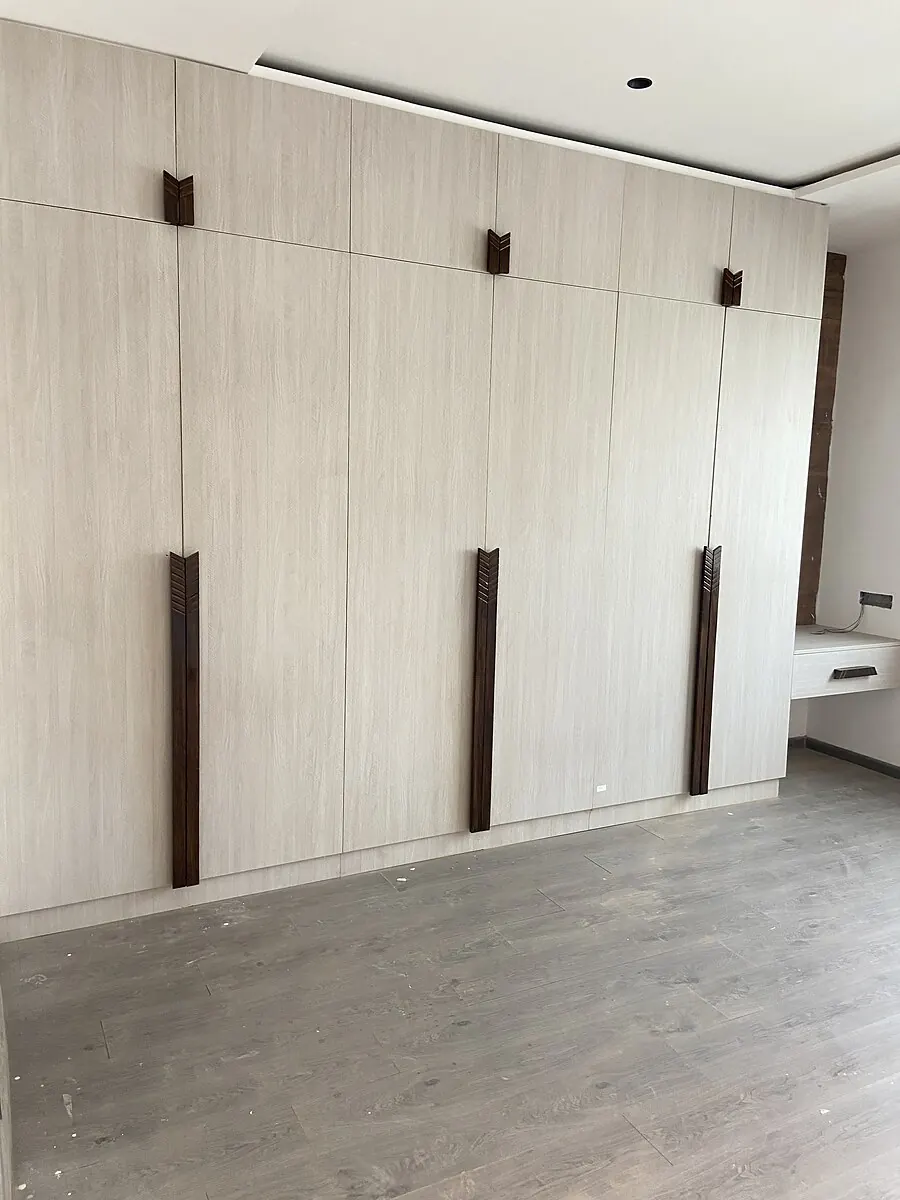
What changes on a west elevation
Finishes on directly-lit surfaces
Anything that bakes daily has a harder life. On surfaces in the direct path of afternoon sun, favour finishes that are stable under heat and UV over ones that are merely beautiful in a showroom. High-gloss surfaces facing a window also mirror the glare straight back at you, which reads as cheap in the evening even when the material is not.
Where you want a warm timber look on a west wall, understand the trade-off: natural veneer will shift in tone over years of direct exposure, and unevenly if part of the panel is shaded by a reveal. That is a property of wood, not a defect, and it is exactly the sort of thing worth deciding knowingly — see how veneer and laminate differ in our finish comparison.
Curtains become a specification, not an afterthought
A single sheer layer is an east-facing solution. West-facing rooms generally want two layers: a sheer for the morning and a genuinely opaque or blackout layer for the afternoon, on a track that lets you close only the sun-struck half. Pelmet or track detailing has to be planned into the false ceiling, which means deciding it before the ceiling goes up rather than after.
Where you put the television
Screens and west windows are natural enemies. If the only wall for a TV unit faces a window, the fix is at design stage: reposition, angle the seating, or plan the curtain layer that makes the room usable at 5pm. Our TV unit guide covers the wall decisions this affects.
Lighting plan
East rooms need artificial light earlier in the evening; west rooms are bright far later and then dark suddenly. Layered circuits — ambient, task and accent, separately switched — matter more on a west elevation because you are compensating for a bigger swing. Common errors are collected in our guide to lighting mistakes.
What changes on an east elevation
East-facing flats have the easier interior brief, with two caveats worth planning for.
- Morning glare in bedrooms. If the bedroom takes the sunrise, blackout provision is not optional for anyone who sleeps past six. This is a curtain-and-track decision, again made at ceiling stage.
- Less passive drying. An east-facing utility gets no afternoon sun, which matters more than people expect for a balcony used to dry clothes. Plan ventilation accordingly rather than assuming the sun will do the work.
North and south, briefly
North-facing rooms get the most consistent, glare-free daylight of any orientation, which is why they are prized for study and work areas. South-facing rooms take high sun for much of the day, which is more manageable than western sun because the angle is steeper and shading devices work better against it.
Most Hyderabad apartments are not purely one orientation anyway. What matters is the facing of the specific rooms you spend the most time in, which is why the useful exercise is per-room rather than per-flat.
The half-hour exercise worth doing before you finalise
Stand in the flat at around 4pm on a clear day, before any interior work starts, and mark on your floor plan where the light actually falls. Then do the same at 9am. You will learn more from that than from any orientation rule, because it accounts for your specific balcony depth, the building next door and the reveal on your windows.
Bring the marked plan to your interior discussion. A brief that says "this wall takes direct sun from 4pm to 6.30pm" produces different, better decisions than a brief that says "west-facing".
What orientation does not change
Carcase material choice is driven by moisture and application, not sun — a BWP board belongs under the sink on any elevation, as the board comparison explains. Hardware choice is driven by use and load. And no orientation makes a badly planned layout work. Facing changes the finish, glazing and lighting conversation; it does not change the fundamentals.
Written by AlcorOne Solutions
AlcorOne Solutions is an interior contracting firm working across Chennai, Hyderabad, Bengaluru, Vizag and Rajamahendravaram. This guide was compiled by the project team from itemised BOQs, vendor quotations, and site records from our own fit-outs, and is reviewed by the partners before publication.
Sources & references.
Standards, regulatory registries, and manufacturer references that back the material grades, pricing framework, and compliance points in this guide:
Frequently asked questions.
Is a west-facing flat a bad buy?
No, and interiors are not the reason to decide. What is true is that a west-facing flat rewards a more deliberate specification — two-layer curtains, heat-stable finishes on directly-lit surfaces, a lighting plan with separate circuits. Budget for those rather than discovering them in your first summer.
Do I need different flooring on a west-facing side?
Flooring is rarely the issue; vertical surfaces and soft furnishings take the exposure. What does matter is that dark floors near a west window will read very differently at 5pm than they did in the showroom, so view samples in the actual room at the actual hour.
Will curtains alone fix afternoon heat?
They will fix glare and help meaningfully with heat, but they are not a substitute for glazing or external shading if the elevation is fully exposed. Curtains are the part inside your control during an interior project; note the rest so you can address it separately.
Does orientation affect where the pooja room should go?
Many households have orientation preferences for the pooja space for reasons that are not thermal, and in an apartment those preferences meet a fixed builder layout. Our pooja room guide covers how that is usually reconciled.
My flat faces west but has a deep balcony. Does that change things?
Considerably — a deep balcony or a projecting slab shades the wall below it for much of the afternoon. This is exactly why the 4pm walk-through beats a rule of thumb: your building may already be doing the shading for you.
Mark the facing and the 4pm light path on your floor plan and send it over. A west-facing brief should read differently from an east-facing one, and it is cheaper to specify that at the start than to add blackout layers and change finishes later.
Planning a west-facing flat?
Send the floor plan with the facing marked. The finish and curtain specification should look different from an east-facing brief, and we will show you where.
Get a callback + itemised BOQ
Leave your name and number — we'll call you back with a scope and a ballpark BOQ for your Hyderabad project. No obligation.