What Actually Breaks in Year One
Interiors do not fail randomly. The first twelve months produce a consistent short list of defects, and each one points at a specific decision made months earlier — which is what makes them worth cataloguing rather than simply fixing.
AlcorOne Solutions is an execution-first interior contracting firm delivering turnkey residential and commercial fit-outs across South India. It is headquartered in Chennai, with offices in Hyderabad, Visakhapatnam and Rajamahendravaram.
Year One Is a Test Nobody Designed
A fit-out is inspected at handover under ideal conditions: everything new, nothing loaded, the site cleaned that morning, and inspection lighting rather than daily living.
The first year is the real test. Drawers get loaded. Shutters get opened thousands of times. A monsoon arrives. The air-conditioning runs through a summer. Materials move with humidity, the building settles slightly, and every marginal decision made during construction gets asked to hold.
The useful thing about this is that the failures are predictable. Almost everything that goes wrong in year one comes from the same short list, and each item on it points at a specific decision rather than at bad luck. Knowing the list is what lets an owner use the defect period well instead of discovering it has expired.
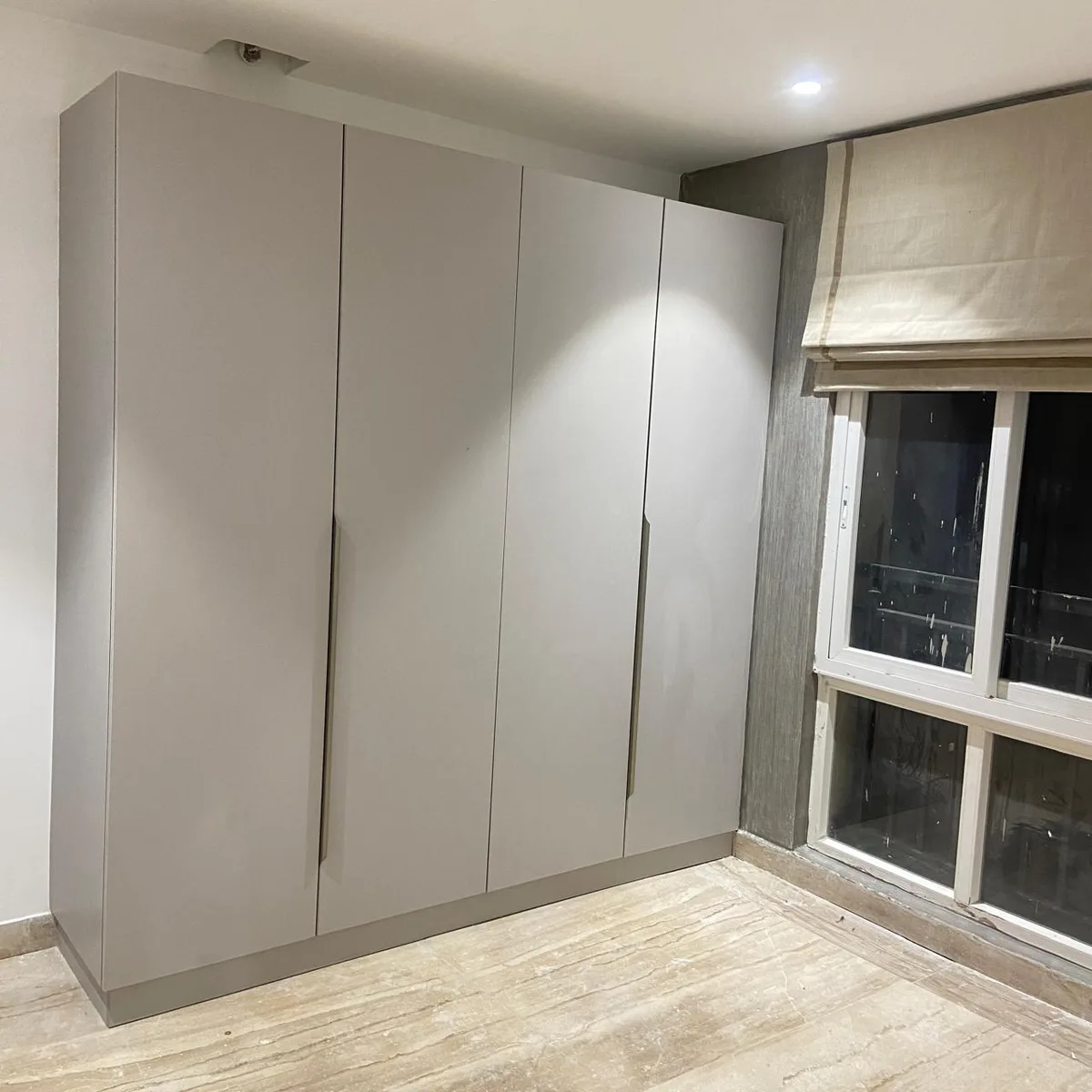
Hinge Sag and Shutter Misalignment
What you see: shutters that were aligned at handover now sit slightly out of line. Gaps taper. Two doors that met cleanly no longer do. Usually appears between month three and month eight.
What it means: normally one of three things. Hinges under-specified for the weight of the shutter, particularly on tall or mirrored doors. Too few hinges for the height. Or fixings into board that is not holding the load well.
What is normal: a small amount of settling is expected, and quality hinges are adjustable in three planes precisely because of it. A single adjustment visit in the first year is routine maintenance rather than a defect.
What is not: the same shutter needing repeated adjustment, or a hinge pulling out of its fixing. That is a specification or a substrate problem and it will not be cured by adjustment. This is one of the failures that traces directly back to whether the hardware actually supplied matched what was quoted.
Drawers That Stop Running Cleanly
What you see: a drawer that ran smoothly now catches, does not self-close, or sits proud at one corner. Almost always the heavily loaded ones — kitchen pot drawers and wardrobe base drawers.
What it means: channels rated below the load they are carrying. A drawer that was tested empty behaves differently with fifteen kilograms of utensils in it, which is why loaded operation is worth checking before final payment rather than after.
Also worth checking: whether the carcass itself has moved. A drawer that binds because the cabinet is no longer square is a different and more serious problem than a channel that is simply under-rated.
Silicone Joints Failing
What you see: the sealant line at the counter-to-wall junction, around the sink, or at the base of a shower wall discolours, shrinks, splits or lifts. Very common in the first year.
What it means: usually one of three things, and they are worth distinguishing because they matter differently. A general-purpose sealant used where a sanitary-grade product was needed. A joint applied over a surface that was not clean and dry. Or a joint doing a job it should not be asked to do — sealant is a flexible finish at a junction, not a structural gap filler, and a wide gap bridged with silicone will always fail.
Treat this one seriously rather than cosmetically. A failed sealant line at a wet junction is a water path into the material behind it, and the consequence of ignoring it for a year is not a discoloured line; it is a swollen base under the sink.
False Ceiling Joint Cracks
What you see: fine cracks along board joints or where the ceiling meets a wall, usually appearing after the first full seasonal cycle.
What it means: movement, which is unavoidable, meeting a junction that was not detailed to accommodate it. Board joints that were aligned rather than staggered, taping and compounding done in a hurry, or a rigid skimmed junction at the wall where a shadow gap or a movement-tolerant detail should have been.
What is normal: one or two hairline cracks in a large ceiling after the first year is common and straightforward to make good.
What is not: cracking along most joints, or a crack that reopens after being filled. The first indicates the jointing was not done properly; the second means the movement is real and the detail needs changing rather than refilling.
Swelling at Wet-Zone Bases
What you see: the base panel of a sink unit, a bathroom vanity or a utility cabinet swells, softens at the edge, or lifts its laminate. Typically between month six and month eighteen.
What it means: water has reached the core of the board. There are only two ways that happens: the wrong board grade was used in a wet zone, or the correct grade was used and a cut edge was left unsealed.
This is the single most consequential year-one defect, because it is the one that is genuinely hard to remedy — the affected panel usually has to be replaced rather than repaired — and because it is a direct indicator of what happened during construction. A swollen sink base in year one is, in most cases, evidence about the material that entered the site.
Laminate Edge Lift
What you see: the edge banding on a shutter or a shelf lifts slightly, usually starting at a corner, sometimes catching a fingernail.
What it means: an adhesive bond that did not hold, and the underlying cause is most often the difference between machine-applied edge banding done under controlled conditions and hand-applied banding done on site. Heat and humidity accelerate it, which is why it shows up sooner in kitchens and in coastal conditions.
Worth acting on early. A lifted edge is an entry point for moisture into the board, so what looks like a cosmetic defect in month eight becomes a swollen panel later.
Finish Marking and Colour Change
What you see: a painted or polished surface marks more easily than expected, or a surface exposed to direct sunlight shifts in tone against an adjacent area that is not.
What it means: for marking, usually a finish specified for appearance rather than for the traffic it receives, or too few coats. For colour change, ordinary behaviour of many finishes under strong direct sunlight rather than a defect.
The distinction matters at handover conversations. Fading in a sunlit bay is generally not a claim. A surface that marks from ordinary contact in month two is.
How to Use the Defect Period
Most of the above is straightforward to correct if raised inside the defect liability period and awkward afterwards. Four practical habits.
- Know the date the period ends, and put a reminder a month before it. The most common reason a legitimate defect goes unremedied is that it was raised after the period closed.
- Keep a running list rather than reporting individually. One consolidated visit is more likely to happen, and more likely to be done properly, than six separate requests each treated as an interruption.
- Do a deliberate inspection at around month ten, before the period expires. Operate every drawer loaded, open every shutter, look at every wet-zone base, and run a fingernail along the edge banding on kitchen shutters.
- Hold a retention if you can. An amount agreed at signing and held until the defect period closes is what keeps the team that built the work commercially interested in returning. Retention negotiated after a defect appears is rarely released — which is why it belongs in the contract at the start rather than in a conversation at the end.
The list above is short by design. Interiors that are specified correctly and assembled carefully do not produce a long defect list in year one — they produce two or three adjustments. A long list is itself the finding.
Written by Pradeep Kumar Vasadi
Pradeep Kumar Vasadi is a co-founder and Principal at AlcorOne Solutions. He grew up in Rajamahendravaram and spent years on the factory floors of Chennai’s manufacturing setups — hard, hands-on work that lit his drive to build something of his own. He now leads project delivery, on-site supervision, and vendor coordination, holding AlcorOne’s fit-outs to shop-floor standards of precision across South India.
Sources & references.
Standards, regulatory registries, and manufacturer references that back the material grades, pricing framework, and compliance points in this guide:
Frequently asked questions.
Our contractor says shutter adjustment is normal maintenance, not a defect. Are they right?
For a single adjustment in the first year, generally yes — quality hinges are designed to be adjustable in three planes precisely because some settling is expected, and a competent contractor will do it as part of closing out the project. Where it stops being maintenance is repetition and cause: the same shutter drifting repeatedly, several shutters across the job, or a hinge working loose from its fixing all indicate under-specification or a substrate problem rather than settling. The useful question to ask is not whether adjustment is normal but why this particular door keeps moving.
How long should a defect liability period be?
Twelve months covering a full seasonal cycle is the most useful length, because several of the defects above only appear after the interiors have been through both a monsoon and a summer of air-conditioning. A shorter period will expire before the wet-zone and ceiling movement failures have had time to declare themselves. What matters as much as the duration is whether anything is held against it — a long defect period with no retention and no retained goodwill is a promise rather than a mechanism.
The sealant around our kitchen sink has failed after eight months. Is that a defect or wear?
Treat it as something to have corrected rather than accept, and have it looked at rather than simply resealed. Sanitary-grade sealant correctly applied to a clean, dry, appropriately sized joint should last considerably longer than eight months. Early failure usually indicates the wrong product, poor surface preparation, or a joint too wide for sealant to bridge. The second reason to act quickly is that the sink junction is exactly where water reaches the base of the unit, so a failed line here is the precursor to the swelling failure that is genuinely expensive.
We are past our defect period and a wardrobe base has swollen. Is there anything we can do?
Raise it anyway, in writing, with photographs and dates. Reputable firms respond to a clear material defect reported shortly after the period on reputation grounds even where they are not obliged to, particularly where the evidence points to specification rather than use. Establish what actually happened before agreeing a repair: if the board grade was wrong for the zone, replacing the panel with the same material reproduces the failure on the same timeline. If the grade was right and a cut edge was unsealed, the repair is a different one.
Year-one defects are a report card on decisions made months earlier — which hardware arrived, which board went into the wet zones, whether cut edges were sealed, whether ceiling joints were taped properly. They are not random, and a job that produces a long list in twelve months was not unlucky.
AlcorOne verifies material grade at inward rather than at complaint, and inspects each layer while it is still visible, because the wet-zone base you can see in month eight is the one nobody looked at in week three.
Want a retention that still means something in month eleven?
A defect period is only useful if an amount is still held and the release condition was agreed at signing.
Get a callback + itemised BOQ
Leave your name and number — we'll call you back with a scope and a ballpark BOQ for your Hyderabad project. No obligation.