Snagging Checklist Before Interior Handover
The woodwork is installed, the dust is cleared, and your new Vizag apartment looks beautiful. But before you sign the final handover document and release the last payment, you must conduct a rigorous "snagging" inspection to catch minor defects before they become major problems in the coastal climate.
What is Snagging?
Snagging is the process of identifying minor defects, cosmetic flaws, or incomplete work at the end of a project. In a coastal city like Vizag, a minor flaw (like a microscopic gap in edge-banding) can lead to massive structural failure due to humidity, making this inspection critical.
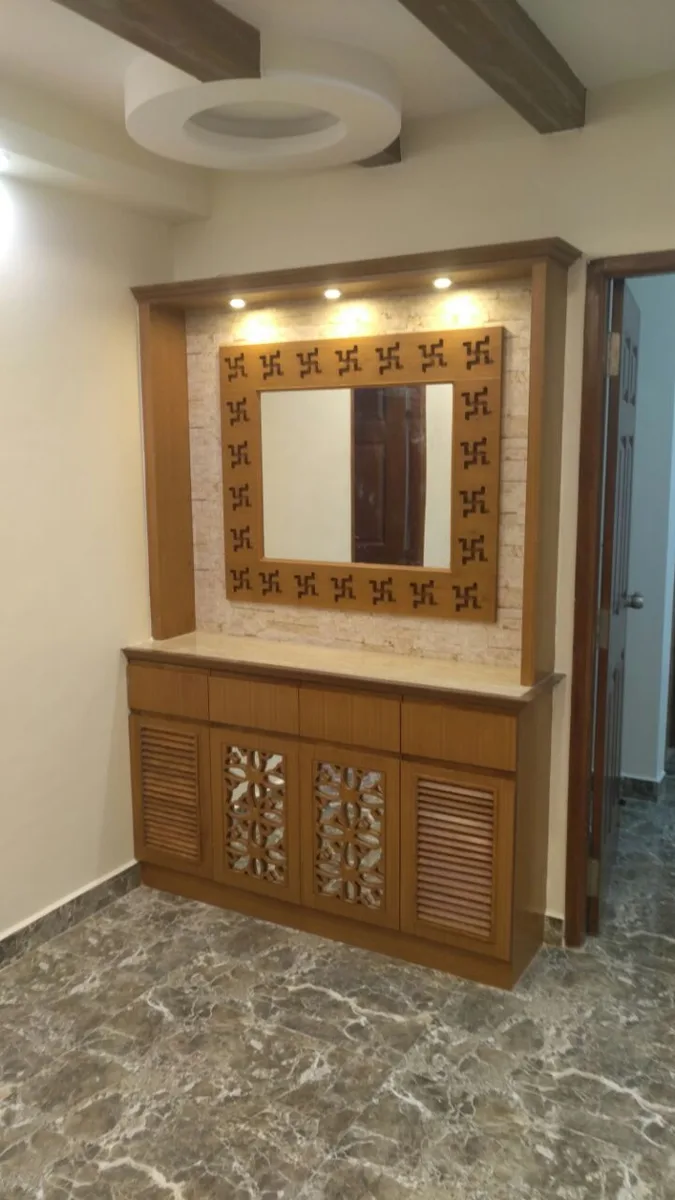
The Vizag Snagging Checklist
1. The Edge-Banding Test (Critical for Coast)
Run your fingers along the edges of every single cabinet door, especially in the kitchen and bathrooms. The PVC edge-banding should feel completely flush with the laminate. If you feel sharp ridges, glue bubbling, or see a microscopic gap where the core plywood is visible, flag it immediately. Moisture will enter that gap and swell the door within months.
2. The Hardware Alignment Check
- Hinges: Open every door to 90 degrees and let it go. If it has a soft-close mechanism, it should close silently and smoothly without slamming. Ensure all doors sit perfectly flush and level with each other when closed.
- Drawers: Pull out every drawer to its maximum extension. It should glide effortlessly. Push it hard; it should catch on the soft-close mechanism and slide silently shut. If it grinds or requires force, the telescopic channels are misaligned.
3. The Plywood Grade Verification
Open the cabinet beneath the kitchen sink. Look at the exposed edges of the cutouts made for the plumbing pipes. You should see the dark, phenolic resin core of IS 710 BWP Marine Plywood. If you see light, blonde wood, the contractor may have cheated you by using cheap MR plywood.
4. Surface Finishes and Polish
- Laminates & Acrylic: Look at the surfaces from an angle against the natural light from the balcony. Check for air bubbles trapped under the laminate or deep scratches in the acrylic caused during installation.
- Veneer Polish: If you have a veneer TV unit or Pooja room, run your hand over it. It should feel perfectly smooth like glass. Rough patches mean the contractor skipped the final sanding steps before applying the PU polish.
5. Electrical and Lighting
Turn on every single light switch. Ensure the warm profile lights inside the wardrobes turn on automatically via the sensors when the doors open. Check that all plug points (especially the heavy 15-amp sockets for the microwave and AC) are fully functional and secure in the wall.
Material Grades: Choosing the Right Plywood
Selecting the wrong wood grade for a specific area is the primary cause of premature interior failure. Here is the full hierarchy:
| Grade | Standard | Water Resistance | Best Used For |
|---|---|---|---|
| BWP (Marine Ply) | IS 710 | Boiling water — no delamination | Kitchen sink cabinet, utility storage, bathroom vanities, wet-wall units |
| BWR Plywood | IS 303 | High humidity + splashes | Kitchen wall cabinets, dining crockery units, dry overhead storage |
| Commercial / MR | IS 303 (MR) | Humidity only — no direct water | Bedroom wardrobes, TV units, study desks |
| HDHMR | None of its own; some are certified as HMR-grade MDF (IS 12406) | High moisture resistance | Wardrobe shutter doors, kitchen shutters (high-gloss / PU finishes) |
| MDF / Particle Board | IS 12406 (MDF), IS 3087 (particle board) | Poor — swells permanently | Low-wear vertical partitions only; avoid in kitchens entirely |
Rule: BWP IS 710 for any unit within 1 metre of a water source. BWR IS 303 for wall cabinets above the splash zone. Commercial MR for all dry rooms.
Written by Gogineni Kalyaan Kumar
Kalyaan is Principal at AlcorOne Solutions, the interior contracting firm he co-founded in 2022. He has overseen 80+ turnkey residential, villa, and commercial fit-outs across Chennai, Hyderabad, Bengaluru and Vizag, with a focus on itemised BOQs, heavy-duty modular execution, and durable interior systems built for South India’s climate.
Sources & references.
Standards, regulatory registries, and manufacturer references that back the material grades, pricing framework, and compliance points in this guide:
Frequently asked questions.
How long does the contractor have to fix the snags?
Professional firms usually clear all items on the snag list within 7 to 10 days of the inspection. Do not move your furniture in until the dusty snagging work is complete.
Does the warranty cover things I miss during snagging?
Partly. AlcorOne provides a one-year workmanship warranty from handover, covering installation and joinery defects such as alignment, levelling, fixing and edge-banding. Materials and hardware are covered separately by their own manufacturer warranties, for whatever term the board, laminate and fittings brand specifies. However, cosmetic damage (like a scratch on the acrylic you notice a month later) is usually not covered, as it cannot be proven who caused it after handover.
Should I hire a third-party inspector?
While mostly used for inspecting the builder's civil work, some homeowners hire independent engineers to verify the interior woodwork. If your interior firm provided a transparent BOQ and factory-finished goods, a personal inspection using this checklist is usually sufficient.
How are AlcorOne projects paid for?
Projects require an upfront deposit of 20% of the total contract value before work begins, adjusted against the final invoice. The remaining payment is released in milestones tied to project progress — material procurement, civil and carpentry completion, finishing and handover — and the exact milestone schedule is agreed in writing for each project, since it varies with project size, scope and site conditions. Anything not listed in the signed BOQ is out of scope until it is agreed in writing as a variation, costed and confirmed before execution. Published rates are exclusive of GST.
A beautiful home is the result of obsessive attention to detail. You shouldn't have to accept misaligned doors or unsealed edges.
AlcorOne prides itself on flawless execution. Our internal quality assurance teams conduct rigorous multi-point inspections before we ever hand the keys back to you, ensuring your Vizag home is perfect from day one.
Expect flawless execution.
We conduct rigorous internal quality checks before handover, ensuring every hinge is aligned and every edge is perfectly sealed.