False ceiling cost & price per sq.ft. in Hyderabad: a complete 2026 pricing guide.
A detailed breakdown of false ceiling cost & price per sq.ft. in Hyderabad. Compare Gypsum board vs. POP, grid ceilings, wooden and PVC accent panels, lighting design tips, and clear height planning guidelines.
Hyderabad's real estate landscape has grown rapidly, especially across Gachibowli, Tellapur, Kokapet, Manikonda, Miyapur, and the Financial District. As premium builders like My Home, Aparna, Prestige, and Rajapushpa hand over spacious new high-rise apartments, homeowners are seeking ways to customize their interiors. A key design element in any modern flat is the false ceiling.
A false ceiling—often called a dropped or suspended ceiling—does far more than just look sleek. In Hyderabad's high-temperature summers, where outdoor heat routinely crosses 43°C, false ceilings provide essential thermal insulation. By trapping a layer of air between the concrete slab and the living space, they create a buffer zone that keeps rooms cooler and lowers AC bills. Furthermore, false ceilings serve as a hidden framework for concealing electrical conduits, multi-split AC copper piping, and internet cabling.
However, one of the first questions homeowners face during the design stage is: "What is the false ceiling cost per sq.ft. in Hyderabad?"
Understanding these rates, material specifications, and building code rules is critical. Selecting cheap, unbranded channels or dropping a ceiling too low can cause structural sagging, water damage, or violate building safety laws. This guide provides an in-depth, expert breakdown of false ceiling costs, materials, and guidelines in Hyderabad for 2026.
1. False Ceiling Cost per Sq.Ft. in Hyderabad (2026 Rates)
False ceiling costs are primarily calculated based on the square footage (sq.ft.) of the covered area. The rate varies depending on the materials used (Gypsum board, POP, PVC, Wood), the complexity of the design, and the local labor charges across different micro-markets in Hyderabad.
| Ceiling Type | Average Rate Range (per sq.ft.) | Common Applications | Key Characteristics |
|---|---|---|---|
| Gypsum Board Ceiling | ₹90 - ₹120 | Living rooms, bedrooms, dining halls | Prefabricated boards, quick installation, seamless finish |
| POP (Plaster of Paris) | ₹110 - ₹140 | Ornate classical ceilings, custom curves | Mixed on-site, highly customizable, labor-intensive |
| Grid Ceiling (Modular) | ₹80 - ₹110 | Bathrooms, corridors, commercial offices | Removable tiles, easy access to service lines |
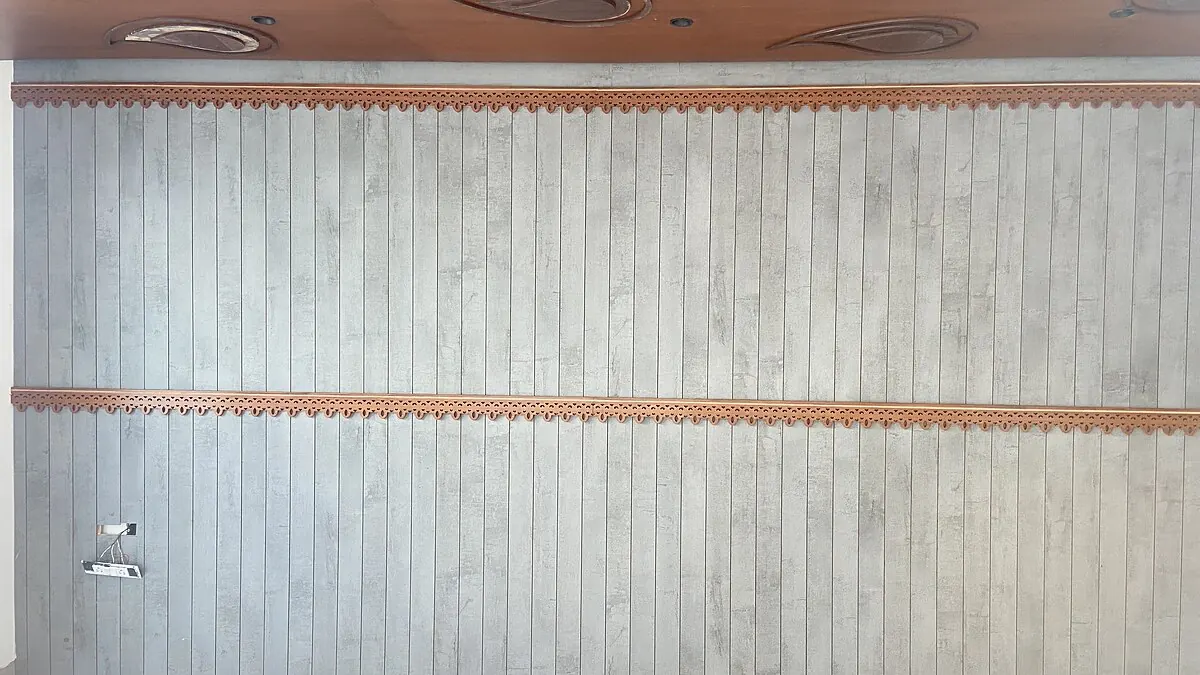
| Wooden / PVC Accent Panels | ₹150 - ₹250 | Balconies, TV unit walls, foyer highlights | PVC is moisture-proof; wood gives warm natural aesthetics; premium look |
Basis: AlcorOne execution rates as of , exclusive of GST. Indicative range for planning; the binding figure comes from an itemised BOQ against the actual site measurements and specification.
What is typically excluded from these base rates? The base rates per sq.ft. generally cover the supply of materials, metal framing, fixing of boards, and joint finishing. They do not include electrical wiring, conduits, light fixtures, putty (lamby/putty work), final paint finishes, or profile lighting slots (which are charged extra per running foot). Scaffolding charges for double-height areas (typical in villas in Tellapur or Kokapet) are also billed separately.
Realistic Budget Estimates for 2BHK and 3BHK Apartments
For a standard 2BHK flat (approx. 1,100 sq.ft.) with false ceilings done in the living room, dining area, and two bedrooms (approx. 700 sq.ft. of actual ceiling area), the cost ranges from ₹63,000 to ₹84,000 for basic gypsum board installation. Putty, premium painting, and basic warm/cool LED strip lighting will add around ₹20,000 to ₹35,000.
For a premium 3BHK flat (approx. 1,800 sq.ft.) with false ceilings in the living, dining, three bedrooms, and a foyer (approx. 1,200 sq.ft. of ceiling area), the base cost ranges from ₹1,08,000 to ₹1,44,000. Adding putty, premium acrylic emulsion paint, and advanced lighting layout designs (including COB and profile lights) will bring the final ceiling invoice closer to ₹1,60,000 to ₹2,20,000.
2. Core Materials: The Foundation of a Long-Lasting Ceiling
A false ceiling is only as durable as the components hidden behind the paint. Homeowners often spend weeks choosing paint colors but pay little attention to the framing and boards, which can lead to premature cracks or warping.
Plasterboard Quality: Gypsum vs. POP Sheets
- Saint-Gobain Gyproc: The benchmark brand in India. Their gypsum boards are standard-grade, fire-resistant, and moisture-resistant. Using genuine Gyproc boards ensures uniform thickness, density, and structural integrity.
- USG Boral: Another reputable brand offering high-density boards with excellent sag-resistance, frequently specified in premium residential projects in the Financial District.
- POP Sheets / Local Casts: Plaster of Paris sheets are prepared by mixing gypsum powder with water and pouring it into pre-cast molds. While highly flexible, unbranded local sheets are prone to micro-cracks and lack uniform density.
Metal Framework: Channels & Perimeter Angles
The framework is the skeleton of the suspended ceiling. It must support the weight of the boards, electrical wiring, and heavy light fixtures.
- Ceiling Section / Intermediate Channel: Run parallel to support the main weight of the ceiling, spaced at intervals of 4 feet (approx. 1.2 meters).
- Perimeter Angle / Wall Angle: Fixed along the walls to support the edges of the ceiling structure.
- Hanger Wires & Connecting Clips: Secure the ceiling section to the structural concrete roof slab.
- Brand Standards: Premium contractors use GI (Galvanized Iron) channels from Saint-Gobain Gyproc or Ultrasteel, featuring a zinc coating of at least 120 gsm to prevent rust and corrosion in Hyderabad’s humid monsoon months.
Moisture Resistance and Material Selection
Moisture is the single biggest threat to false ceilings. Selecting the right board for the right space is critical to preventing sagging and water damage:
- Standard Gypsum Board (Grey/White paper): Ideal for dry habitable areas like living rooms, dining rooms, and bedrooms.
- Moisture Resistant (MR) Gypsum Board (Green paper): Impregnated with water-repellent additives. Mandatory for kitchens where steam from cooking is high, and in semi-outdoor areas like utility balconies.
- BWP (Boiling Water Proof IS 710) Blockboards / PVC Panels: Standard gypsum boards must never be used in open balconies or wet bathrooms. For balconies, PVC panels or BWP wood cladding are recommended because they resist weathering, rain splashes, and humidity.
- Grid PVC Tiles / Calcium Silicate Tiles: Used in bathrooms to provide quick access to geysers and overhead plumbing lines.
3. Design Complexity and Cost Additions
The design of a false ceiling dictates the labor effort, which significantly influences the final cost. Simple, flat ceilings are fast to execute, whereas multi-layered structures require intricate metal framing and meticulous finishing.
Cove Lighting Ceilings
Cove lighting involves creating a recessed ledge or "pocket" along the perimeter of the ceiling where LED strip lights are concealed. The light reflects off the ceiling, producing a soft, diffused glow without direct glare. This design is highly popular in living rooms across luxury high-rises in Kokapet.
Cost Impact: Adds ₹10 to ₹20 per sq.ft. or is calculated per running foot of cove length due to the additional framing and plasterboard edges required.
Floating Ceilings
A floating ceiling is suspended away from the walls, leaving a gap of 2 to 4 inches around the perimeter. LED strip lights are installed in this shadow gap, making the ceiling appear to "float" in mid-air.
Cost Impact: Requires highly precise metal alignment and edge-nosing. Typically priced at the higher end of the gypsum range (₹110 - ₹120 per sq.ft.).
Single-Step vs. Multi-Step Ceilings
- Single-Step Ceiling: A simple drop from the main slab, creating a clean flat surface. Usually priced at the base rate (₹90 - ₹100 per sq.ft.).
- Multi-Step Ceiling: Multiple levels drop progressively, creating a 3D layered look. This is common in large living rooms in villas at Kokapet. Each additional step adds to the material count and framing complexity, increasing the rate by 20% to 40% per step.
4. Lighting Design & Electrical Safety in False Ceilings
A false ceiling acts as a canvas for lighting design. Selecting the correct light types and ensuring electrical safety is crucial.
Light Fixture Categories
- LED Strip Lights: Installed inside coves to provide indirect ambient light. Warm white (3000K) creates a cozy, relaxing environment, neutral warm (4000K) is ideal for dining areas, and cool daylight (6500K) is preferred for task-oriented rooms. Philips, Wipro, and Havells are reliable brands.
- COB (Chip on Board) Lights: Downlights that cast a focused, narrow beam of light. They are used to highlight specific features like artwork, showpieces, or textures on walls.
- Panel/Downlights: Diffused, wide-angle lights used for general illumination across the room.
- Profile Lights: Aluminum channels embedded flush into the plasterboard, covered with a milky diffuser and lit by high-density LED strips. They create sleek, continuous geometric lines of light. Profile lighting is always priced extra. Expect to pay ₹180 to ₹300 per running foot for the channel, strip, driver, and installation. It is not calculated in the square-foot ceiling rate.
Electrical Safety & Conduits
The space inside a false ceiling contains high-voltage electrical wires. To prevent fire hazards:
- All wires must be FR-LSH (Flame Retardant Low Smoke Halogen) grade, run inside heavy-duty, fire-retardant PVC conduits.
- Flexible conduits should only be used for short connections to the light fixtures.
- Wire joints must be sealed inside junction boxes; loose tape joints are strictly prohibited.
- Lighting circuits should be split across different breakers to avoid overloading a single driver.
5. Clear Height Guidelines for Ceilings
The National Building Code (NBC) sets minimum clear heights for rooms, and in Hyderabad it applies through the Telangana Building Rules, 2012 (GO Ms 168), which adopt its room standards. Ignoring them can make a space feel suffocating and trap heat.
Minimum Clear Height Guidelines
The code minimums, measured from the finished floor:
- Habitable Rooms (Living Room, Bedrooms): at least 2.75 meters (approx. 9.0 feet) to the lowest point of the slab, or 2.4 meters (7 ft 10 in) to the false ceiling in an air-conditioned room.
- Kitchens, Bathrooms and WCs: at least 2.75 meters for kitchens and 2.1 meters for bathrooms and WCs.
Ceiling Drop Planning (4-6 Inches)
In typical Hyderabad apartments (like those in Miyapur or Manikonda), the builder-provided clear height from concrete slab to floor is about 9.5 to 10 feet (2,896 to 3,048 mm).
In an air-conditioned room, the 2.4 m code minimum allows a far deeper drop than most rooms want; AlcorOne plans the false ceiling drop at 4 to 6 inches (100mm to 150mm) for proportion and air movement, a design choice rather than a code limit. In a room without air-conditioning, keeping 2.75 m (2,750 mm) clear leaves about 146 mm at a 9.5 ft slab, so keep the drop under about 140 mm (5.5 inches) there.
Thermal Considerations: Dropping the ceiling too low traps hot air in the living zone rather than the buffer zone. Hot air naturally rises; keeping the drop restricted ensures the warmer air stays above the occupied zone, keeping the living area cooler and improving AC efficiency.
6. Worked Example: False Ceiling Cost for a Typical 3BHK in Rajapushpa Provincia, Narsingi
To show how these rates add up, here is an illustrative example for a typical premium 3BHK flat (a worked estimate, not a record of a specific AlcorOne job) at Rajapushpa Provincia, Narsingi:
- Property Specifications: 3BHK, 2,010 sq.ft. super built-up area.
- Ceiling Coverage Area: Living room, dining hall, passage, and three bedrooms (total area: 1,180 sq.ft.).
- Design Selected: Clean minimalist perimeter cove ceiling in the living/dining area, flat single-step ceiling in the bedrooms, and profile light slits in the passage.
- Material Specifications: Saint-Gobain Gyproc boards, G.I. framing channels (0.55 mm thick), and joint tapes. Balconies clad in weather-proof PVC wood panels.
- Cost Breakdown:
- Gypsum False Ceiling (1,180 sq.ft. @ ₹105/sq.ft.): ₹1,23,900
- PVC Balcony Panel Cladding (120 sq.ft. @ ₹180/sq.ft.): ₹21,600
- Profile Light Channel Cuts (60 running feet @ ₹220/ft): ₹13,200
- Painting & Lamby Putty Finish (1,300 sq.ft. @ ₹35/sq.ft.): ₹45,500
- Total False Ceiling, Cladding & Finishing Cost: ₹2,04,200 (excl. GST and lighting fixtures)
- Typical Timeline: For a scope like this, framing, boarding, putty work and painting typically take about 14 working days.
7. Snagging & Quality Checklist for Homeowners
Before clearing the final payment for your false ceiling contractor, use this inspection checklist to ensure the work is structurally sound and aesthetically perfect:
| Component | Verification Step | Acceptable Standard | Status |
|---|---|---|---|
| Structural Frame Grid | Check the spacing of the intermediate steel channels before the gypsum boards are screwed on. | Maximum spacing of 4 feet (1.2 meters) between ceiling sections. | [ ] |
| Perimeter Anchoring | Verify how the perimeter angles are secured to the masonry walls. | Screwed securely at intervals of no more than 2 feet. | [ ] |
| Ceiling Alignment | Use a digital laser level to check if the ceiling is completely flat. | Zero visible slope or sagging across the room. | [ ] |
| Fiberglass Joint Tape | Ensure all plasterboard joints are covered with fiber-mesh tape before putty application. | Essential to prevent hairline cracks along board joints. | [ ] |
| Screw Countersinking | Verify that metal screws are driven slightly below the board surface and sealed with joint compound. | No exposed screw heads or protrusions. | [ ] |
| Concealed Access Panels | Ensure trap doors or access panels are created for hidden devices. | Mandatory for geysers in bathrooms and drain valves of AC indoor units. | [ ] |
Written by Gogineni Kalyaan Kumar
Kalyaan is Principal at AlcorOne Solutions, the interior contracting firm he co-founded in 2022. He has overseen 80+ turnkey residential, villa, and commercial fit-outs across Chennai, Hyderabad, Bengaluru and Vizag, with a focus on itemised BOQs, heavy-duty modular execution, and durable interior systems built for South India’s climate.
Delivered project proof.
Completed AlcorOne projects behind the figures in this guide — scope, materials, and finish levels you can compare against:
Sources & references.
Standards, regulatory registries, and manufacturer references that back the material grades, pricing framework, and compliance points in this guide:
What the warranty actually covers
A cost figure is only half the question; the other half is what happens after handover. AlcorOne's warranty on interior work in Hyderabad runs in three tiers, stated separately because they cover different things and expire at different times — a single headline figure would misrepresent all three.
| Tier | Term | What it covers |
|---|---|---|
| Carcass — plywood | 10 years | Delamination, borer attack and manufacturing defect in the board of modular kitchens, wardrobes and fixed joinery built by AlcorOne. Conditional on the board grade specified in the signed BOQ being the grade supplied and installed — BWP to IS 710 in wet zones, BWR to IS 303 above splash lines. This tier covers the board itself and nothing else. |
| Installation and workmanship | 1 year | Defects attributable to how the work was built and fitted — alignment, levelling, fixing, edge-banding and similar. |
| Hardware, fittings and appliances | Manufacturer's own term | Hinges, channels, drawer systems, electricals, sanitaryware and appliances carry the vendor's own warranty — Hettich, Blum, Häfele and Ebco each publish their own mechanism terms. AlcorOne registers that documentation in the client's name at handover and facilitates the claim. |
Not covered under any tier: water ingress originating from base-building or plumbing defects outside AlcorOne's scope; damage from misuse, unauthorised modification, or third-party work carried out after handover; and normal wear to finishes. The full terms are on the Terms of Service page.
Read a headline warranty number in this category the same way. A ten-year figure quoted on its own is almost always the carcass tier alone, with installation sitting at one to two years beneath it. Ask any contractor which of those years are theirs and which are the brands'.
Frequently asked questions.
What is the average cost of a false ceiling per sq.ft. in Hyderabad?
The average cost of a false ceiling in Hyderabad ranges from ₹90 to ₹120 per sq.ft. for Gypsum board ceilings and ₹110 to ₹140 per sq.ft. for POP ceilings. Grid ceilings cost between ₹80 and ₹110 per sq.ft., while wooden or PVC accent panels range from ₹150 to ₹250 per sq.ft. Note that lighting fixtures, electrical wiring, paint, and premium design features are usually charged extra.
Which material is better for residential false ceilings: Gypsum board or POP?
Gypsum board is pre-fabricated, offering quick installation, smooth machine-made finishes, and minimal dust during execution. Plaster of Paris (POP) is mixed on-site, allowing for highly customized decorative shapes, curves, and moldings, but takes longer to dry and creates more mess. For standard modern designs, Gypsum is preferred; for ornate classical designs, POP is better.
How does the National Building Code (NBC) affect false ceiling design in Hyderabad?
The NBC, which applies in Hyderabad through the Telangana Building Rules (GO Ms 168), requires at least 2.75 meters (approx. 9 feet) from the finished floor to the slab in habitable rooms and kitchens, or 2.4 meters to the false ceiling in an air-conditioned room; bathrooms and WCs need 2.1 meters. On a typical 9.5 to 10 foot slab the code allows a far deeper drop than most rooms want; AlcorOne keeps ceiling drops to 4 to 6 inches (100–150mm) as a design choice, not a code limit; a modest drop also prevents trapping hot air in the living zone.
Are there specific material requirements for false ceilings in high-moisture areas?
Yes. Bathrooms, balconies, and kitchens are high-moisture zones. Standard gypsum boards will sag or rot when exposed to continuous moisture. Homeowners should use Moisture Resistant (MR) Green Gypsum boards, PVC panels, or Calcium Silicate tiles in these spaces, or choose BWP (Boiling Water Proof IS 710) blockboards for heavy wooden cladding elements.
How much does profile lighting cost for false ceilings in Hyderabad?
Profile lighting is not calculated in the flat sq.ft. ceiling rate. It is charged extra per running foot, typically ranging from ₹180 to ₹300 per running foot. This includes the aluminum profile channel, diffuser, LED strip light, and the driver/power supply. Custom cutting of slits in the ceiling also requires precision framing.
What is the recommended frame spacing for false ceilings?
According to standard construction practices, ceiling sections (framework channels) should be spaced at a maximum interval of 4 feet (approx. 1.2 meters). The perimeter angles must be securely anchored to the walls every 2 feet to prevent sagging and ensure structural safety.
How long does it take to install a false ceiling in a standard 3BHK flat in Hyderabad?
For a standard 3BHK apartment (approx. 1,800 sq.ft.), false ceiling framing and board fixing takes about 7 to 10 days. Putty application, joint taping, sanding, and painting require another 5 to 7 days, resulting in a total timeline of 12 to 17 days depending on design complexity.
What warranty does AlcorOne give on its interior work?
Three tiers, stated separately because they cover different things and expire at different times. Ten years on the plywood carcass from the date of handover, against delamination, borer attack and manufacturing defect in the board — conditional on the grade specified in the signed BOQ being the grade supplied and installed. One year on installation and workmanship: alignment, levelling, fixing, edge-banding and similar. Hardware, fittings and appliances carry the manufacturer's own term, and AlcorOne registers that documentation in the client's name at handover and facilitates the claim. Not covered under any tier: water ingress originating from base-building or plumbing defects outside AlcorOne's scope; damage from misuse, unauthorised modification, or third-party work carried out after handover; and normal wear to finishes.
Final Thoughts
A false ceiling is one of the most effective ways to elevate the design of your home while improving thermal and acoustic comfort. When planning your interiors in Hyderabad, do not select a contractor based on a low lump-sum quote. Always request a detailed BOQ specifying the brand of gypsum board (e.g., Saint-Gobain Gyproc), the thickness of the G.I. channels (minimum 0.5 mm), and the paint brand.
Ensure that your ceiling layout keeps to the clear-height guidelines above to maintain proper room height and safety. Prioritize investing in quality framing materials and moisture-resistant boards for kitchens and wet areas—these structural decisions do the most to keep your ceiling safe and crack-free.
If you've recently completed your own false ceiling installation in Hyderabad, what do you wish someone had told you before you started — and what turned out to be your best decision, or your biggest mistake?
Get a detailed BOQ, not just a quote.
Share your ceiling plans or carpet area for a detailed breakdown of materials, framing, and profile lighting options.