MR vs BWP in Madurai, Trichy, Tirunelveli and Vellore: heat is the enemy, not water
Tamil Nadu's interior south spends most of the year hot, with moderate rather than coastal humidity, with some of the highest sustained summer temperatures in the state. Almost every failure homeowners here describe — shutters that stop closing flush, joints that open, laminate edges that lift at the top of a tall unit — traces back to heat and movement rather than to water. Buying a moisture-resistant board will not fix any of them.
AlcorOne Solutions is an execution-first interior contracting firm delivering turnkey residential and commercial fit-outs across South India. It is headquartered in Chennai, with offices in Hyderabad, Visakhapatnam and Rajamahendravaram.
The mismatch at the heart of most quotations
Chennai is three to five hours away and dominates how interiors are marketed across Tamil Nadu. Chennai is coastal. Its material playbook — marine plywood, anti-corrosive hardware, defensive sealing against salt and humidity — is correct for Chennai and is quoted, largely unchanged, in Madurai and Tirunelveli.
Inland southern Tamil Nadu is a different environment. Long stretches of very high daytime temperature, moderate rather than coastal humidity, no salt load, and most of the rain concentrated in the October–December northeast monsoon. IMD's 1991–2020 climate normals put Madurai's average daily maximum at 37–38 °C from April to July and its annual mean relative humidity at 60%, against 73% for Chennai; Tiruchirappalli sits at 62%, Tirunelveli (Palayamkottai) at 67% and Vellore at 68%. The board-destroying mechanism that BWP exists to prevent — liquid water and repeated wetting breaking down a urea-formaldehyde bond — comes from plumbing and wet floors, not from ambient humidity in that range, so it is confined to the units that meet water. What is present instead is thermal cycling: materials expanding through the heat of the day and contracting overnight, over and over, for years.
What heat actually does to joinery
It opens joints. Different materials in the same cabinet expand at different rates. Repeated cycling works fasteners loose and opens visible lines at mitres and butt joints, particularly on long runs and tall units.
It attacks adhesives before it attacks boards. The weak point in a hot house is glue, not ply. Iron-on PVC edge banding applied on site with a hot iron uses a hot-melt adhesive with a modest heat tolerance. On a west-facing wardrobe in Tirunelveli, that bond softens repeatedly. Edges lift at the top corners first — the classic hot-climate failure, and one no board upgrade prevents.
It fades and stresses dark finishes. Dark shutters on a sun-facing elevation absorb significantly more heat, which accelerates both fading and the adhesive problem above.
The grade table for a hot inland home
| Location | Grade | Note |
|---|---|---|
| Kitchen sink cabinet and base unit under the sink | BWP to IS 710 | Mandatory everywhere. Plumbing does not care about climate. |
| Remaining kitchen base units | BWR to IS 303 | Adequate. |
| Kitchen wall cabinets | BWR to IS 303 | Same as our standard specification everywhere. Cooking steam, not the climate, sets this grade. |
| Bathroom vanity | BWP to IS 710, or WPC | Mandatory. |
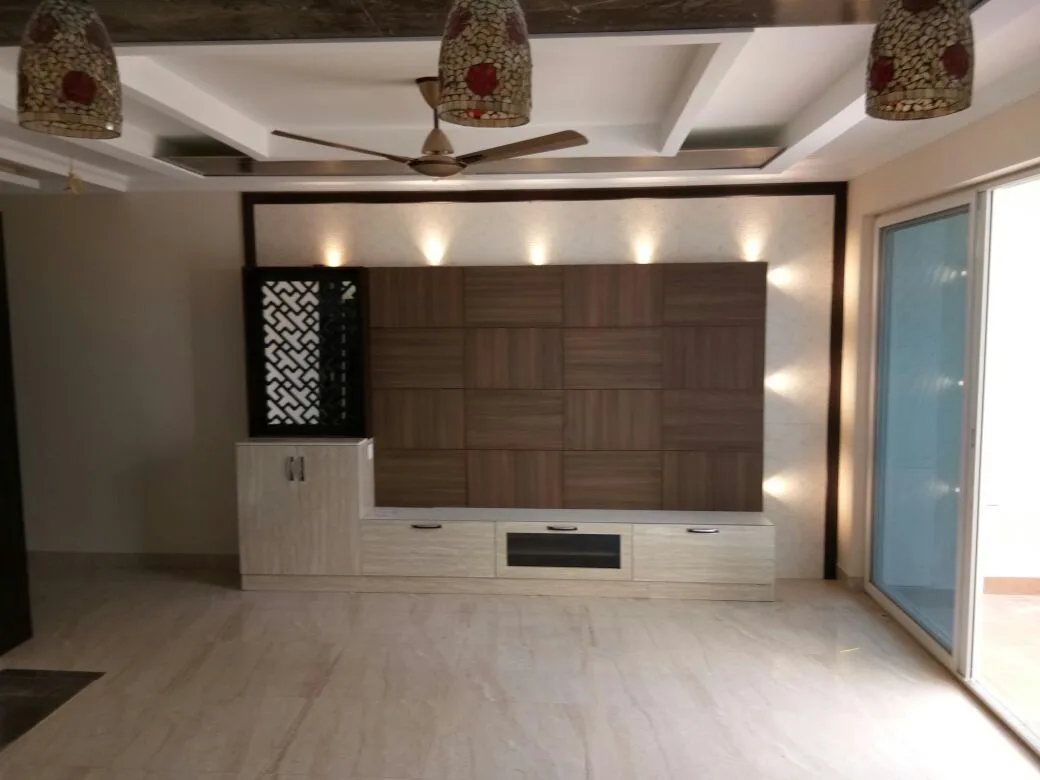
| Wardrobes, TV units, study, partitions | Commercial MR | Correct. A BWP wardrobe in Madurai protects against a risk this climate does not present. |
Buy the edge, not the core
If the saving from that table is redirected to one thing, make it the edge treatment.
Factory-applied PUR edge banding uses a polyurethane adhesive that cross-links after application and holds a substantially higher heat tolerance than the hot-melt used by a site iron. In a climate whose dominant failure mode is adhesive softening, that is not a cosmetic upgrade — it is the single most relevant specification on the page, and it costs a fraction of a blanket board upgrade.
Second priority: movement allowance in the detailing on runs longer than about eight feet, and a preference for lighter shutter colours on sun-facing elevations.
Write the downgrade down
Specifying MR deliberately only protects you if the document says so. The line must read MR to IS 303 with the brand named, not "commercial ply" — otherwise you have set no floor at all, and the ten-year carcass cover has no named grade to attach to. This applies identically whether the agreed grade is BWP or MR. Reading an interior BOQ covers the line format.
Material Grades: Choosing the Right Plywood
Selecting the wrong wood grade for a specific area is the primary cause of premature interior failure. Here is the full hierarchy:
| Grade | Standard | Water Resistance | Best Used For |
|---|---|---|---|
| BWP (Marine Ply) | IS 710 | Boiling water — no delamination | Kitchen sink cabinet, utility storage, bathroom vanities, wet-wall units |
| BWR Plywood | IS 303 | High humidity + splashes | Kitchen wall cabinets, dining crockery units, dry overhead storage |
| Commercial / MR | IS 303 (MR) | Humidity only — no direct water | Bedroom wardrobes, TV units, study desks |
| HDHMR | None of its own; some are certified as HMR-grade MDF (IS 12406) | High moisture resistance | Wardrobe shutter doors, kitchen shutters (high-gloss / PU finishes) |
| MDF / Particle Board | IS 12406 (MDF), IS 3087 (particle board) | Poor — swells permanently | Low-wear vertical partitions only; avoid in kitchens entirely |
Rule: BWP IS 710 for any unit within 1 metre of a water source. BWR IS 303 for wall cabinets above the splash zone. Commercial MR for all dry rooms.
Written by Gogineni Kalyaan Kumar
Kalyaan is Principal at AlcorOne Solutions, the interior contracting firm he co-founded in 2022. He has overseen 80+ turnkey residential, villa, and commercial fit-outs across Chennai, Hyderabad, Bengaluru and Vizag, with a focus on itemised BOQs, heavy-duty modular execution, and durable interior systems built for South India’s climate.
Sources & references.
Standards, regulatory registries, and manufacturer references that back the material grades, pricing framework, and compliance points in this guide:
Frequently asked questions.
Everyone in Tamil Nadu talks about marine plywood. Is it really unnecessary in Madurai?
Unnecessary in bedrooms, wardrobes and above-counter kitchen units — yes. Necessary under the sink and in the bathroom vanity — also yes. The marine-plywood conversation is a coastal conversation that travelled inland with the marketing, and inland it should be narrowed to the units that actually meet water.
Vellore is somewhat greener than Madurai. Does the advice still hold?
Yes. Vellore is still firmly inland, with the hottest summers of the four (an average daily maximum of 39 °C in May) and no salt load. The grade table applies. Vellore's distinguishing feature is a large transient medical and student population rather than a distinct climate, which affects durability and cleanability priorities more than board grade.
My wardrobe laminate edge has lifted. Is that a plywood problem?
Almost certainly not. Lifting at edges, especially at the top corners of tall or sun-facing units, is an adhesive failure in the edge band. Upgrading the core board would not have prevented it; factory PUR edge banding is the fix.
Does the northeast monsoon change anything?
Not for the board table. Most of the rain falls between October and December, when mean relative humidity rises to about 70–80%, close to Chennai's for those months. That is humidity MR plywood is made for in a closed, dry room; what degrades it is liquid water. It is worth checking that external wall waterproofing is sound before fixing joinery against it, but that is a building issue rather than a grade issue.
The most common mistake in southern Tamil Nadu is not cheap material. It is expensive material bought to solve a coastal problem, funded by cutting the edge treatment that this climate actually destroys.
AlcorOne specifies for the environment the house is in. Send us your floor plan and we will show you which lines to downgrade, and the one line worth spending the saving on.
Built for heat, specified honestly.
We will not sell you a marine specification for a hot inland house. Grade room by room, movement allowance where it counts.
Get a callback + itemised BOQ
Leave your name and number — we'll call you back with a scope and a ballpark BOQ for your Madurai project. No obligation.